
Following the recent heavy rain and flash flooding across Edinburgh, we’ve had a lot of calls from customers dealing with water getting into places it really shouldn’t. We’ve seen everything from water backing up through shower drains and flooding bathrooms, to rainwater getting into boilers through or around the flue.
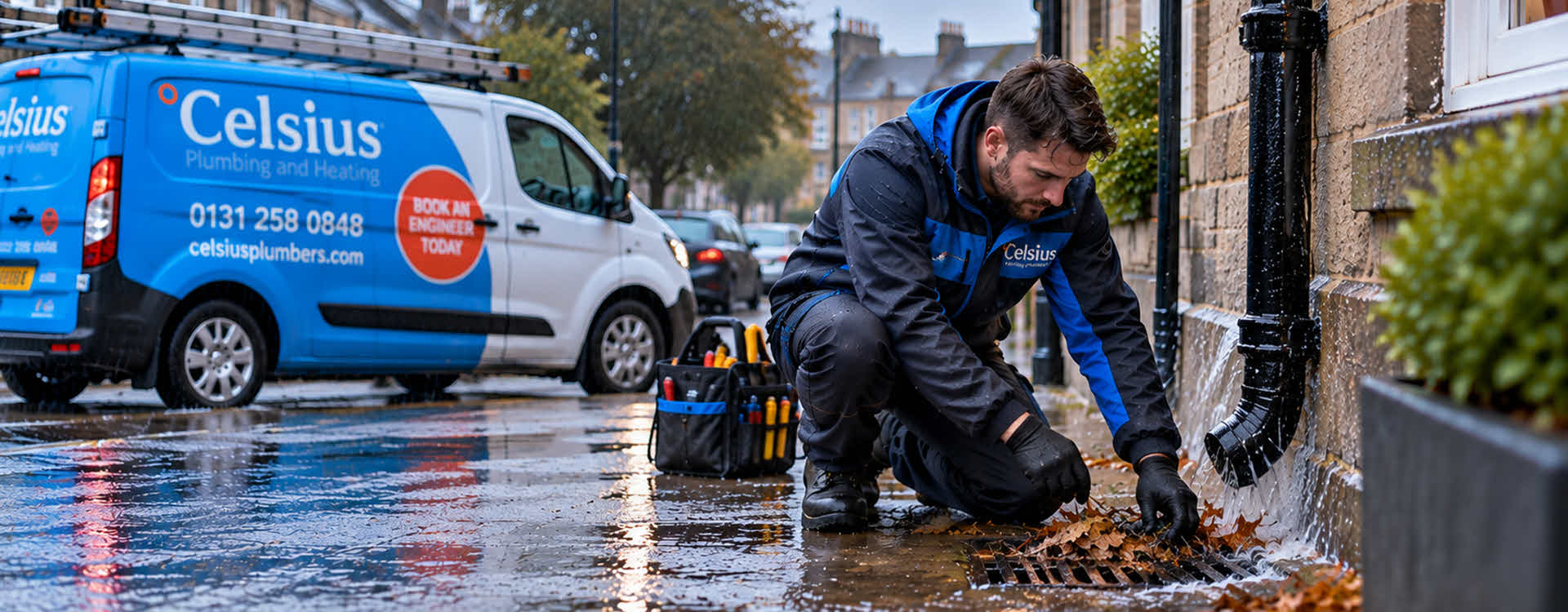
When a huge amount of rain falls in a short period, drains and sewers can become overwhelmed. Unfortunately, there’s no way to completely protect every home from extreme rainfall, but there are a few sensible things you can do to reduce the risk and be better prepared.
Here are our top five tips on how to protect your home from flooding:
1. Keep your drains, gullies and downpipes clear
It sounds simple, but it can make a big difference. Leaves, moss and general garden debris can quickly block drains and gullies around your property, leaving heavy rain with nowhere to go. It’s also worth checking that your gutters and downpipes are flowing freely and aren’t overflowing against the outside of your home.
Before heavy rain is forecast, have a quick look around your property and safely remove any obvious surface debris. Don’t lift drain or manhole covers yourself – if you spot a blocked road gully or flooding on the street, this should be reported to the City of Edinburgh Council.
2. Don’t ignore water coming back up through showers or drains
This was one of the biggest problems we heard about during the recent flooding in Edinburgh. Several customers contacted us after water started coming back up through shower drains and flooding their bathrooms.
During very heavy rain, the sewer network can become overwhelmed. If that happens, water backing up through a shower, bath, toilet or floor drain may be contaminated, so try to avoid coming into contact with it and keep children and pets away. If sewage is visible or you believe the flooding has come from the public sewer, report it to Scottish Water.
Once everything has settled, it’s worth having the drainage investigated rather than simply assuming it was a one-off. If it has happened once, understanding why could help you work out whether anything can be done to reduce the risk next time.
3. Check your boiler after extreme rain
This is another issue we dealt with following the recent heavy rain. In some properties, rainwater managed to get into the boiler through or around the flue. Water and boiler electrical components are obviously not a good combination.
If you notice water around or inside your boiler, a fault code, unusual noises or the boiler stops working after heavy rain, don’t keep resetting it and never remove the boiler casing yourself. If water has entered the boiler, leave it switched off and arrange for a Gas Safe registered engineer to inspect the boiler and flue before using it again.
Even if the boiler appears to start normally, it’s better to have water ingress properly checked rather than risk further damage. If you’re unsure whether your boiler has been affected following heavy rain, our heating engineers in Edinburgh can inspect the boiler and flue and advise you on the safest next step.
4. Check your home insurance before you need it
This is one that’s very easy to put off until something happens. Take a few minutes to check your buildings and contents insurance and understand what cover you have for flooding and water damage. It’s also worth saving your insurer’s emergency claims number somewhere you can easily find it.
If your home does suffer flood damage:
- Take photographs and videos of the damage where it is safe to do so.
- Contact your insurer as soon as possible.
- Keep receipts for any emergency work or temporary repairs.
- Speak to your insurer before arranging major repairs where possible.
- Don’t rush to throw damaged items away unless they pose a health risk. Your insurer may want photographs or other evidence first.
A little preparation now can make an already stressful situation much easier to deal with.
5. Know where your stopcock is
Every homeowner should know this one, but it’s often only during an emergency that people go looking for it. Make sure everyone in the house knows where your internal stopcock is and check that it can actually be turned. They can become very stiff when they haven’t been touched for years.
Your stopcock won’t stop rainwater or water backing up through a drain, but if a plumbing problem happens at the same time, being able to quickly isolate your mains water could prevent even more damage.
Not sure where yours is, or found that it won’t turn? Don’t wait until you have a leak to find out.
Keep an eye on the Edinburgh weather
When exceptionally heavy rain is forecast, a five-minute check of your drains, gutters, gullies and anything stored at low level can be time well spent.
We can’t control the Edinburgh weather, but being prepared can sometimes prevent a much bigger headache. It can also be worth moving valuable or electrical items away from basement floors, garages or other parts of the property that you know may be vulnerable during heavy rain.
What should you do if your home has already been affected?
If water has already entered your home, safety comes first:
- Avoid contact with water that may have come from drains or sewers, and don’t use electrical equipment that has been exposed to water.
- If the problem involves your boiler, plumbing or drainage, have the affected system checked before assuming everything is back to normal.
- It’s also worth keeping photographs, videos and records of any damage or emergency work in case you need them for an insurance claim.
Need help after heavy rain or flooding in Edinburgh?
If you’ve noticed anything unusual with your boiler, plumbing or drainage following the recent flooding, please don’t ignore it. Our local plumbers can help investigate the problem and advise you on the best next step.
Whether it’s a boiler affected by rainwater, drainage concerns or a plumbing issue following flooding, get in touch with our team and we’ll be happy to help.












John Taylor
Categories:
News Plumbing Hacks